Growing Stories
I've been doing some big thinking about how to grow on this journey into the unknown.

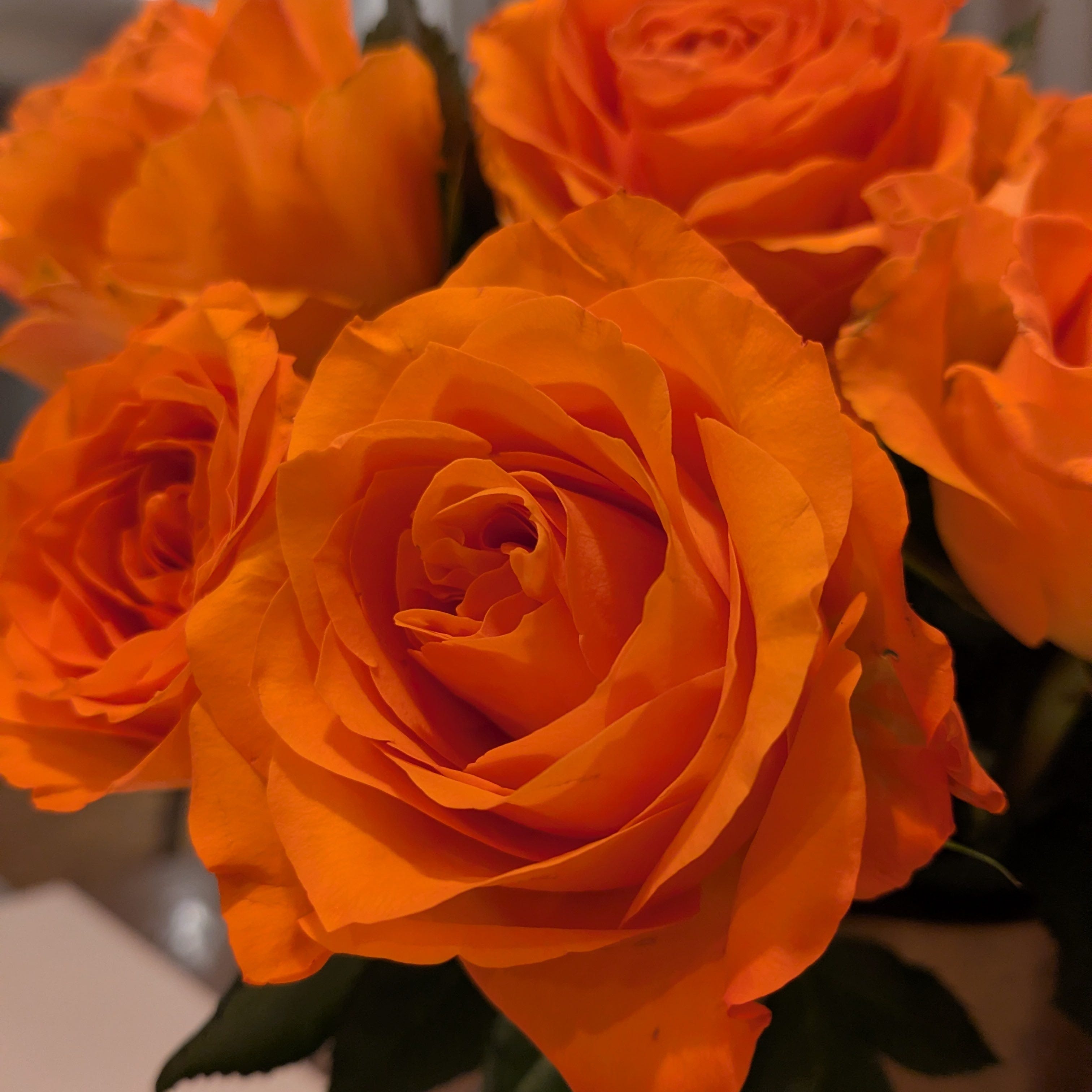
During my weekly grocery shop this week I found myself spontaneously wandering towards the fresh flowers. I wanted a gift for myself to brighten my kitchen. For a moment I considered the economical option, but I left the £3 carnations in their bucket. They’d have been more of a punishment than a pleasure. Instead I took home a generous bunch of orange roses which made my heart sing (for £7). This small choice got me thinking. Why not choose what makes me happy?
The dilemma is that happiness requires a budget. Holidays make me happy, I want to work part-time for the next few years to support our children, I hope we can stay in our home for as long as possible. These choices each have a price-tag. My life as the sole earner and primary spender can be a confusing variance between generous hedonism and retributive frugality. I’m painfully aware how important it is to live life to the full, living as Mark hoped. And also over-spending will intensify a long-term hardship which I don’t want to have to withstand. Retaining stability in the eyes of our children has a quantifiable demand. There’s also a cost to prudence - if the accounts decrease my sense of strength, cause arguments or drain my energy. Is it worth it?
Spreadsheeting
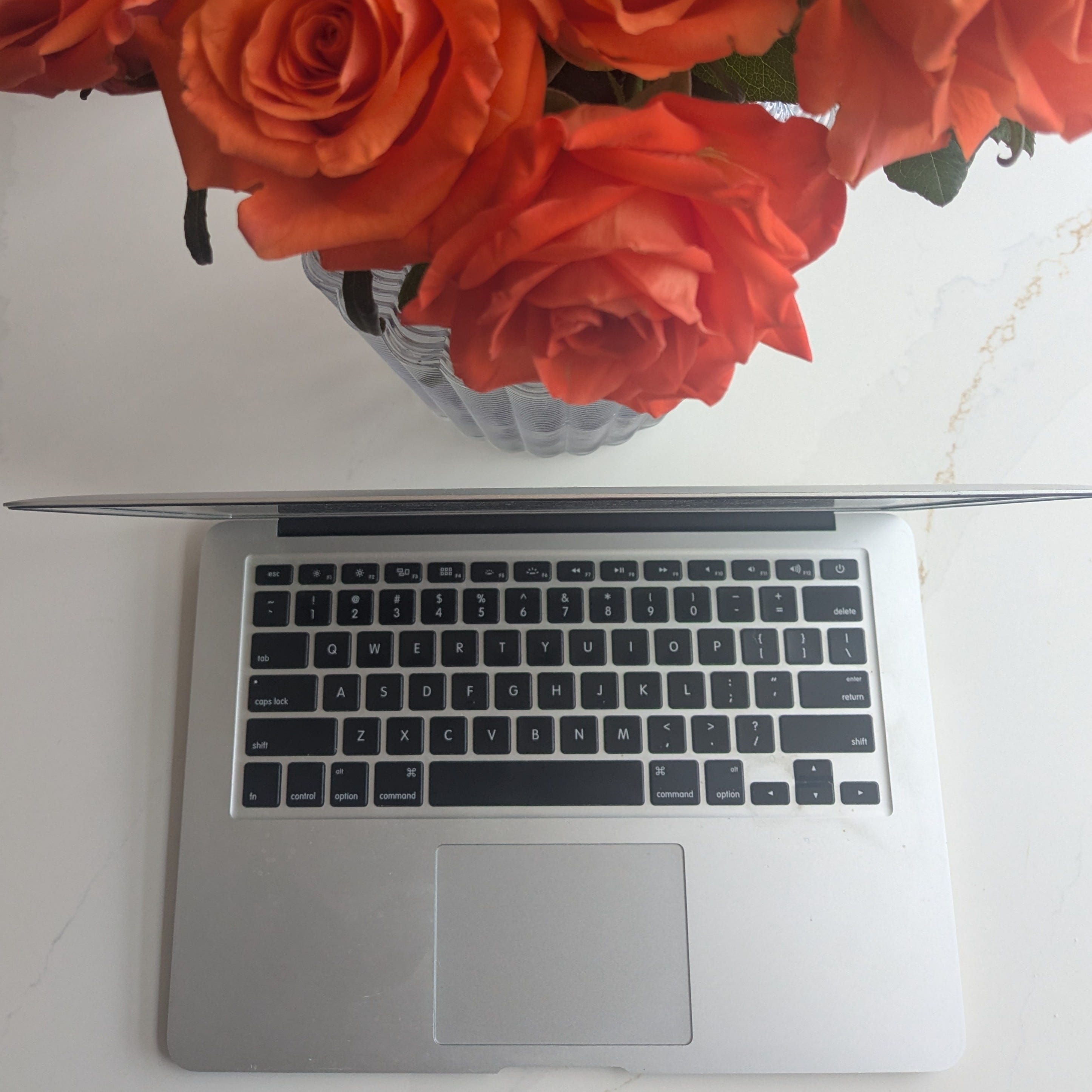
I recently re-opened a spreadsheet on my laptop titled, “My Finances 2026”. The name is telling since I first created it in 2024, soon after Mark was diagnosed. At that time this plan felt treacherously optimistic. I didn’t expect him to live for more than two years, he could have died within a few weeks. Calculating for a life without him was a hideous thing to have to do.
My future felt unimaginable then. I had brutally forceful myself to figure out the rational questions which needed answers. My professional training allowed me just enough separation from my feelings to do the evaluation of my situation then. And here we are, 2026 has arrived, Mark's not with me. I’m grateful for the spreadsheeting.
There’s a joke among those who know us well that Mark and I have a spreadsheet for everything. It’s true, we do. We love them. The present-tense is intentional because he lives in the cells of conjectured ledgers. As a data-analyst by trade, historically our spreadsheets were his initiative. He claimed that if he ever entered the Olympics he’d compete in Excel. Over two decades of deconstructing our lives together, we became proficient together at converting our felt experience into known variables. What felt good to both of us could be optimised in the numbers.
“My” personal finance plan now gives me a direction of travel for the next ten to fifteen years. I can think of nothing more adult than planning how to pay a mortgage, care for others and maintain one’s own financial independence. It’s one of the most grown-up things I’ve ever done. And because this is my spreadsheet, without his inputs, it requires me to identify my qualitative goals as well as do the complicated mathematics to achieve that success.
For instance, one of the goals in my spreadsheet is to, “Accept that I cannot do it all.” And, “Remember: I will not be able to afford everything.” With the aim to, “Take responsibility for the consequences of my choices.” The larger mission here is to plan for a life that I want to live. There's so much of my situation that's unwanted. Choosing what I want now feels like radically bold thing to do.
The Plan
I’ve edited my plan many times in the last two years. Initially out of necessity, more recently in a quest for autonomy, the calculations have been refined to goal-seek something I can live with. My spreadsheets are the digital version of a well-worn ledger book. The version history shows that I’ve been intentionally growing my financial acumen. I'm also aware that it might be a lousy list of wasted wishes.
Mark used to continuously remind me, “The plan is not the territory”. Eisenhower, the US President during WWII, astutely observed, “Plans are worthless, but planning is everything.” Less famous is the rest of Eisenhower’s quote, “When you are planning for an emergency you must start with this one thing: the very definition of emergency is that it is unexpected, therefore it is not going to happen the way you are planning.” I know in my bones how unsafe, unpredictable and beyond control life can be. Why then bother to invest several weeks of my time into pointless planning?
Because it’s doing me more harm than good to not have a plan. I need something concrete to give me confidence in this quantity of uncertainty. I would be naive to think that anything will change financially if I keep doing the same things as I’m doing today. Since I’m currently self-employed, I need an achievable business plan that delivers my personal finance goals. My business revenue and income goals rely on a career plan, which supports my earning potential. You can see how quickly this planning has become very complicated and grown-up.
My plans are dependent on many assumptions and it’s all interdependent on me, within myself. I am one to-do list, I can only live in one calendar, I will only have myself to answer to. And unless I’m careful, it will all become very boring, very quickly. I therefore need to invest in fun (see Excel sheet 1, tab 3).
Fun is expensive. Stability isn’t cheap. “They” say don’t make any big decisions in the first year of bereavement. But “they” don’t say how to make big decisions when your life’s been turned upside down and your trusted soul partner isn't there to support your decision making. One year, two years, three, fifteen … It's always going to be tricky to adult this hard. I might as well start learning now to take responsibility for our family’s well-being, enjoy becoming accountable to myself, manage our accounts effectively and earn my own confidence.
I’ve been working on Plans A, B and Z, the current, anticipated and worst case scenarios. Having more than one plan helps me to feel safe and to take risks. Both are needed. Reality will undoubtedly pull on my assumptions of the future. The process of writing these intersecting plans has helped me identify the gaps in my thinking. My hope is that this mental iterating will inform me as my situation emerges and hold me accountable to why I do anything.
Hello Ego
In the presence of so much unknown, my sense of control is crucial. My own belief in my ability to provide for the four of us is paramount. It’s painful to carry so much responsibility, unless I grow the strength to withstand my own story. I've already learned how to step carefully with it. In the toughest of times my self-belief has been a lifeline through the suffering. I can’t ignore how far beyond my own expectations I’ve been able to grow; I am more resilient than I ever imagined.
Self-possession is in the core of my resilience and it’s also tied to some uncomfortable truths. I am defiant, ambitious and I like recognition. My independence is both a strength and a weakness. I am bold, but I sometimes lack prudence. I am visionary, which risks wishful thinking. I want to be independent, which means I unintentionally push people away.
Scientifically speaking the part of us which tells us our own stories is called the ego. But that’s an unpleasant word which few people want to be publicly associated with, especially women and including me. So rather than make myself wrong by blaming my ego’s strategies, it has become necessary to explore my ego’s benefits.
Self-esteem has evolved with an evolutionary purpose to orientate us for survival. It defends our identity when we lose our sense of meaning. But it prioritises endurance over comfort in life. By encouraging us to take responsibility it strategises for survival, not joy. It helps to plan for the future, likes setting goals and learns from mistakes. It also separates us from the crowd, which is a source of independence that has been misused and misunderstood throughout humanity.
My ego needs to be put to good use because my identity has been annihilated. My context has done a 180. I'm no longer a wife or a co-parent. Some days I don’t feel like a reliably competent human. I’m also no longer a person who can be pushed over or who values external comparison. Rather than self-destruct with shame, loneliness and exhaustion, my plan is to plan for a healthy application of ego. I need flexibility to quantify the measures which make me happy and put my strengths to profitable use (see Excel sheet 2, tab 1).
Of course I can ask for help. I’ve continually asked for professional advice, taken input from colleagues, gone to friends for guidance and received generous family support. I’ve had incredible help over the last two years. And I will continue to ask for help when I know what help I need. The thing that’s ignored in the generosity of, “Please call if you need me,” or, “If there’s anything we can do to help, just let us know” is the ongoing absence of my own knowing. I don’t know what I need so I can’t ask for it.
I have trained myself to occasionally break my ego’s defences and take guesses at what I need, when possible. What I also need is for other people to guess in the darkness, step out of the not knowing and risk being wrong in their story about what I might need. Unexpectedly my Excel spreadsheets have become a form of storytelling because they add substance to my understanding of what I qualitatively and quantitively need. They’re becoming a hypothesis for how my conversations with other people can become even more supportive.
Old Stories
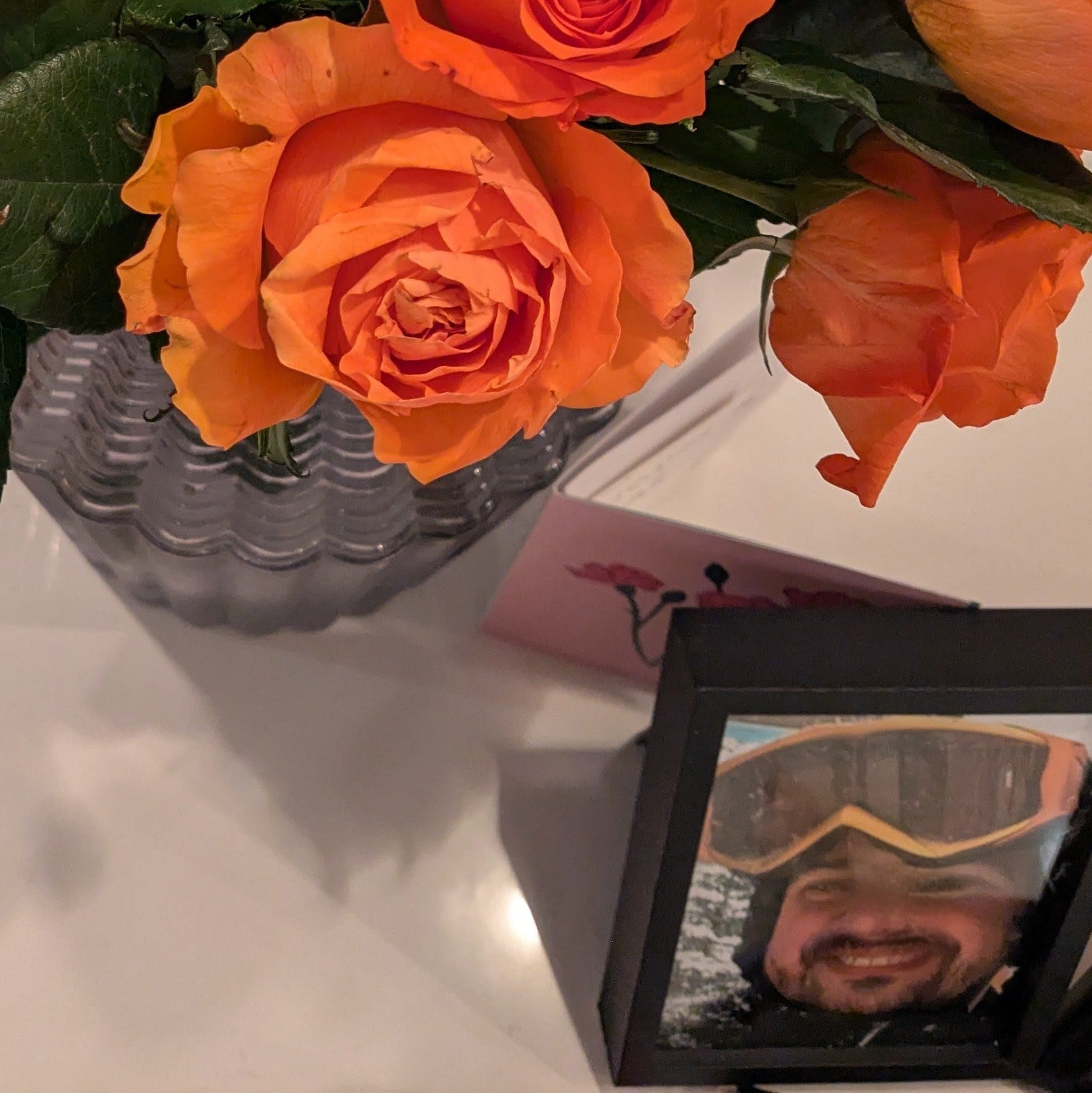
Writing versions ABZ of a financial plan, business plan and career plan is a lot of work. It’s also required me to burn down some old narratives, to regain control of my life and reinsert the good stuff, where possible. For instance, an old story is that someone else will buy me flowers at the end of a tough week. Or that flowers are a frivolous waste of money. The old narrative is that I don’t really need flowers.
A healthy version of ego-energy is essential to me now, because like a fire on a cold night it can guide me towards what I want. Perhaps like orange flowers I can grow towards what brings me warmth. This inner aiming also gives me the courage to step away from the things which don’t support my story. I read that ego is harmful when it rages out of control and useless if it’s extinguished. Holding both the internal heat to fulfil my ambition and the external fear of what might happen is an ongoing struggle. It will be made worse if I commit to anything which undermines me.
Mark endured years of this chronic pressure, as the main earner in our household. An old story is that we can’t afford our big dreams. The fear of a pandemic, redundancy and irrelevance in the job market are still real problems to manage. I want to respect the effort he gave to secure our future by believing that I create my own stress. I can help myself not to flare into anxiety or silently smoulder with resentment, if I retain the ember of his warm guidance in the darkness. Who’s to say love doesn’t live in Excel formulas?
The ability to tell stories has enabled humans to simulate potential danger and assess future risk since the beginning of cognition. Stories are a part of our social evolution. We’ve growth the ability to spot deceit and evaluate the truth through telling them. I now need to grow my own story, supported by Excel. To coherently know who I was, understand where I am now and decide when it’s safe enough to become who I will be. In a nutshell I need confidence to dare to dream and I need a dream to believe in (see Excel sheet 1, tab 1, cell A2).
We don’t just tell stories to ourselves internally, our stories help us to connect with others externally. In my spreadsheets I’m weaving outcomes which make sense to me, so I can be coherent with others, gain their trust and let go of my defences. I’m taking account of how I can recruit, involve and retain the support of others. Because it would be artless to write my plans alone.
In the book ‘Man’s Search For Meaning’, the Holocaust survivor Viktor Frankl showed that although our circumstances are not within our control, we can always retain the freedom to choose our perspective. This ability to change our attitude and flex our response is wonderfully human. There's no other creature on the planet with opposing thumbs, the power of complex language and the ability to choose for themselves. Being human means that we get to learn while we experience this life. Which is why I chose my current career (Plan A).
Thanks to the power of choice we can find meaning in any situation, which supports our ability to endure it. I don’t know what’s going to happen next. I do know that in recent years of wild uncertainty I was able to put one foot in front of the other and create something I’m proud of, despite having no clue whatsoever about what was coming next (Plan B).
This is not about silver-linings, positive re-writes or fake social threads. Unlike the gullible Emperor in Hans Christian Andersen’s story of the ‘Emperor’s New Clothes’, I’m trying to avoid being caught publicly naked at some point in the future. I’m actively using my planning process to ask myself hard questions. And I’m hoping it will help others to be more honest with me. I’ve been using my professional practice to get under the cloak of my own defences, to find out what’s really going on in my assumptions of myself. And then objectively decide what I would do in the worse case scenario (Plan Z).
I need a wardrobe of new outfits now - comfortable, durable, well-fitting and a little bit stylish. Rather than a parade of invisible, magical thinking. I want a career plan which clothes me in real meaning, a financial plan that I can hold onto in times of uncertainty and a business plan which feels believable.
Dual-Career
As I began to work on my finances my mind began to wake between 2am and 4am to fret the infinite range of scenarios. My stomach would lurch and tense unexpectedly during mundane activities, when I realised the cost or consequence of the activity. I’ve become less patient with the kids and probably quite hard to live with because of the data points my brain was plotting.
Given that nothing in my finances has fundamentally changed much since I started my plan two years ago, I found my reaction interesting. I’m doing OK yet I was finding it hard to stay present because the future was violently yanking me. It was intense, like grief but more vulnerable. So I sat and asked myself, “What about this is hard for you to live with right now?”
The story was not about my finances it was about my career. Not only am I now a solo parent to three children, I’m also the sole provider for our family, and the sole owner of a business. If a coaching client came to me with that degree of responsibility I’d point out that their inner expectations were exceptionally high. I’d offer them compassion for the chronic stress it’s likely that they’d be experiencing.
During a decade of coaching hundreds of people through career transitions, I’ve also transformed my own career and moved countries twice. As a result I’ve developed a process to help others make intentional career choices to support their unique circumstances. As a result I have been telling myself, “You can do this,” while walking myself through my own coaching programme. But as I progressed the ground beneath me began to fall away. It didn’t matter how much I believed in my own process. The person I wanted to lean on was missing. I kept falling because the crutch to my confidence is no longer there.
I made 3 major career decisions before meeting Mark. We’d met while I was making one of my biggest career pivots. For the last twenty years I’ve made every career decision with his support. During our relationship I made 17 big decisions to nurture my growth. Mark has been my go-to person for career conversations for most of my adult life.
We were equally ambitious, employable and autonomous. In theory we were dual-income, but over time we chose to prioritise his career to grow our family’s finances. My career gave us both meaning; we loved sharing its learning, flexibility and creativity together. We balanced our mutual priorities continuously, with an equal sense of professional integrity. We were the definition of a dual-career couple.
My new story as the leader of my own career just doesn’t add up yet. Two minus one still feels equal to two. Missing my person feels hard not just because of the money, there’s also a deficit in my confidence. It’s maddening how simple grief can be and yet how difficult it is to live with. I felt irrationally annoyed with myself for having known the rational facts without changing my inner narrative. My inner career-story had remained insolently attached to the way things were. Everything else in life can be learned after a year or so of dedicated practise, except this. An identity level change takes years. The plural in that sentence is crucial.
I am the sole decision-maker in my career. Dual-career management is my old story. If I make a mistake Mark can’t save me. Hopefully I’ll have twenty more good working years ahead of me, with perhaps twenty more decisions to make. I know Mark can encourage me, he will definitely inspire my growth, but he cannot tell me what to do.
No matter how much I want someone else to tell me the best next step, the only person who’s advice I’d currently trust is no longer beside me. My primary person in life gave me the power to do anything. Having a great partner makes life easier, because they add their influence to your effort. By becoming multipliers of each other you get double. Which means if I’m going to survive this next section of my story I must learn to approve of my own decisions. And I need to find other trusted advisors who can amplify my growth.
Hoping that someone will come to my rescue is an old story. Another way to increase my own capacity is to remove the doubt which drains my self-esteem. It’s always been true that I’m in charge of my career, but until now I’ve rarely fully-lived into that truth, because I’ve been holding a dual-career mentality. There’s freedom in the scale of the permission and trepidatious fear in attempting to believe it.
Urgent
Another old story is that it all needs to happen now. As a result of my business modelling, ugly words like leverage, profit and scale have crept into my inner musings. I notice that this productive, commercial form of growth has an urgency to get it done. It seems that I’ve put myself into a mindset which believes that if change doesn’t happen now I will fail. Which is silly.
I can’t afford this urgent mindset because if I’m not healthy I will fail. I can only do this if I make clear agreements with myself, identify my true priorities, set realistic goals and respect my own energy. Being unwell, burning out or zoning out is not an option for me.
I can push for a week or two, but after that sprint I’ll need to rest. I cannot and must not stay in a constant state of urgency. I’ve observed my own rate of work for over 10 years of self-employment. Usually I need one week of recovery for two weeks of intensity. I can be highly focused, extremely productive and make surprising amounts of progress. And then I need to soften my focus, do something else, work shorter days and go to bed early, otherwise it will all go wrong for everybody.
Over-working to produce better results is an old story. Regulating my nervous system is essential to my ability to do good work and to be a good parent. There’s a cost to being healthy and a cost of not being well (see Excel sheet 1, tab 2).
New Story
There are some days when I feel very sorry for myself. I might believe that limiting story for a day, a week or more. Then when my body is ready it’s choosing to let it go. I get to write and re-write the story I want to tell about myself, to grow for many years yet. My internal narrative doesn’t dissolve my pain, but it does give me meaning which makes my suffering more tolerable. Grief hasn’t gone, only my ability to live with it has gradually improved.
During human evolution stories have been shared around firesides to prevent avoidable mistakes. Stories evolved to save ourselves and each other. Grief is the oldest story of all, perhaps second only to love. My bereft nervous system now needs a new story to hold onto and my shattered heart wants to trust my head, when it’s too tired to do the thinking.
I'm asking myself to consciously choose a new version of myself because identity change doesn't happen easily. However this growth can happen consciously, I’ve done it before and I can do it again. To stop my old story from holding me back I have to look for the new narrative which I want to commit to.
Although I need to be rigidly accountable to my goals, I can hold my responsibility lightly and buy myself flowers. The numbers are nothing unless I assert my presence to their existence. The spreadsheet might not be accurate, but if it helps me to source a sense of who I could be it will bring stability while I grow. I am strong enough to maintain my boundaries and soft enough to connect with others, while acknowledging when enough is enough. It will take consistent care and compassion to carry these glowing embers in Excel and elsewhere through the next twenty years.